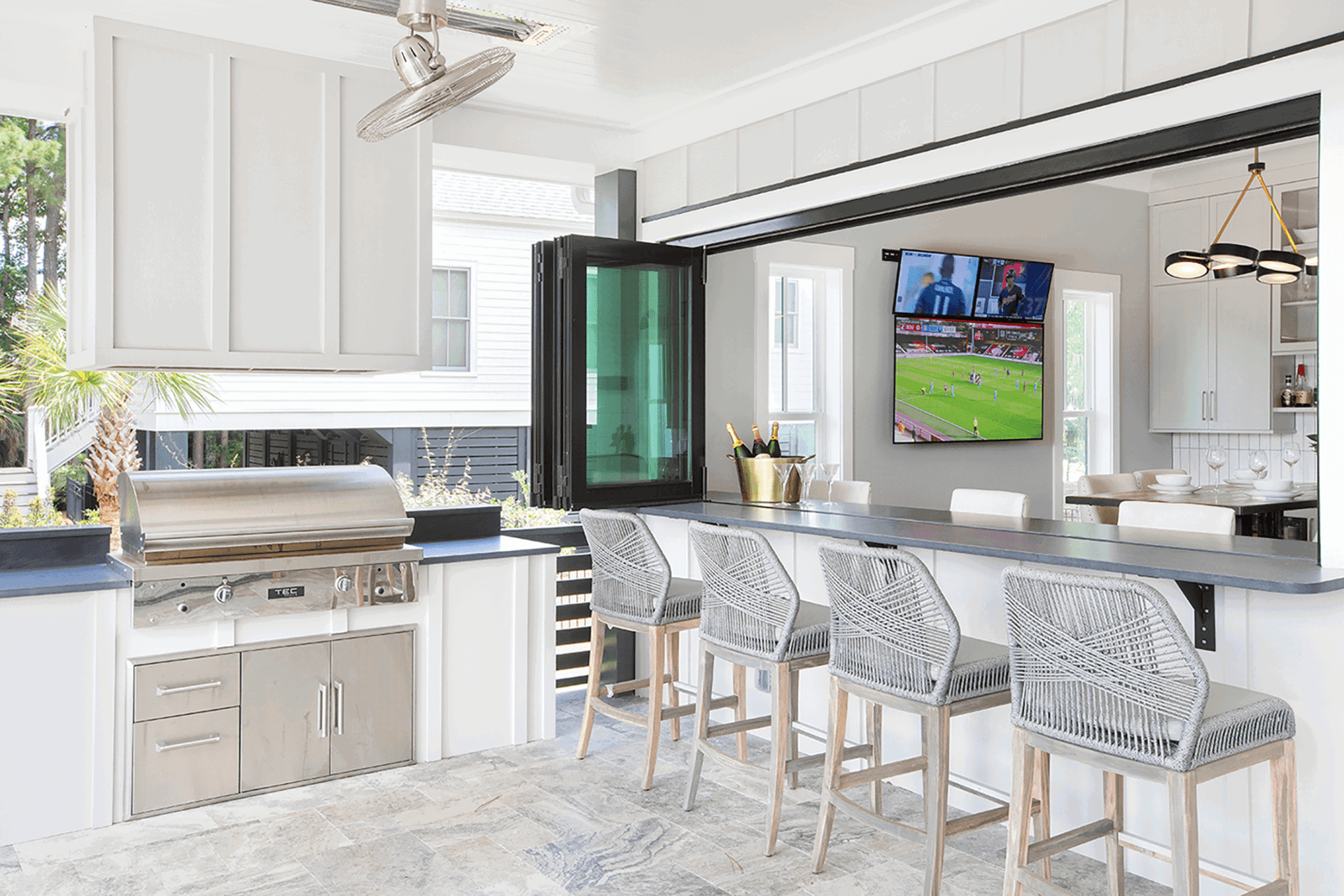
Fenestration design is in a pivotal moment. As weather events push further into extremes—from intense heat and cold to increasingly frequent tropical storms—architects and builders are being asked to deliver façades that perform at a higher level without sacrificing scale, transparency or aesthetics. This is underscored in the latest green building initiatives, like LEED v5, and with the National Glass Association’s (NGA) tracking of building efficiency recommendations and code updates.
Thermally broken doors and windows offer a solution to enhancing a project’s energy efficiency, whether it is a residential or commercial project. These opening systems break the continuity between thermally conductive materials to interrupt the flow of thermal energy.
It is important to note that, in addition to high performance systems, architects want the freedom to push scale, openness and transparency. Homeowners also want beauty and protection.
Industry-leading thermally broken doors can meet all these demands without trade-offs. The ability for designers to create future-forward buildings often hinges on the understanding of what these systems are and how to use them.
What are thermally broken doors?
Thermally broken doors feature a thermal barrier between framing components that effectively reduces heat transfer between interiors and exteriors. This helps HVAC systems efficiently maintain a consistent and comfortable indoor temperature by limiting the transfer of heat between indoor and outdoor environments. Thermally broken doors can also be specified with full-lite glass leaves without compromising their performance.
For instance, Vista Fold™ from Euro-Wall is available with thermal breaks and weather-resistant glazing. This means it interrupts the flow of thermal energy whether it is specified with a traditional muntin grid, cross grid or any other muntin configuration.
While glass selection plays a critical role in overall thermal performance, the thermal break within the frame is equally important. Aluminum, while strong and durable, is highly conductive. Without a thermal break, heat and cold transfer directly through the frame, reducing the effectiveness of even high-performance glazing. Thermally broken framing systems address this issue at the source.
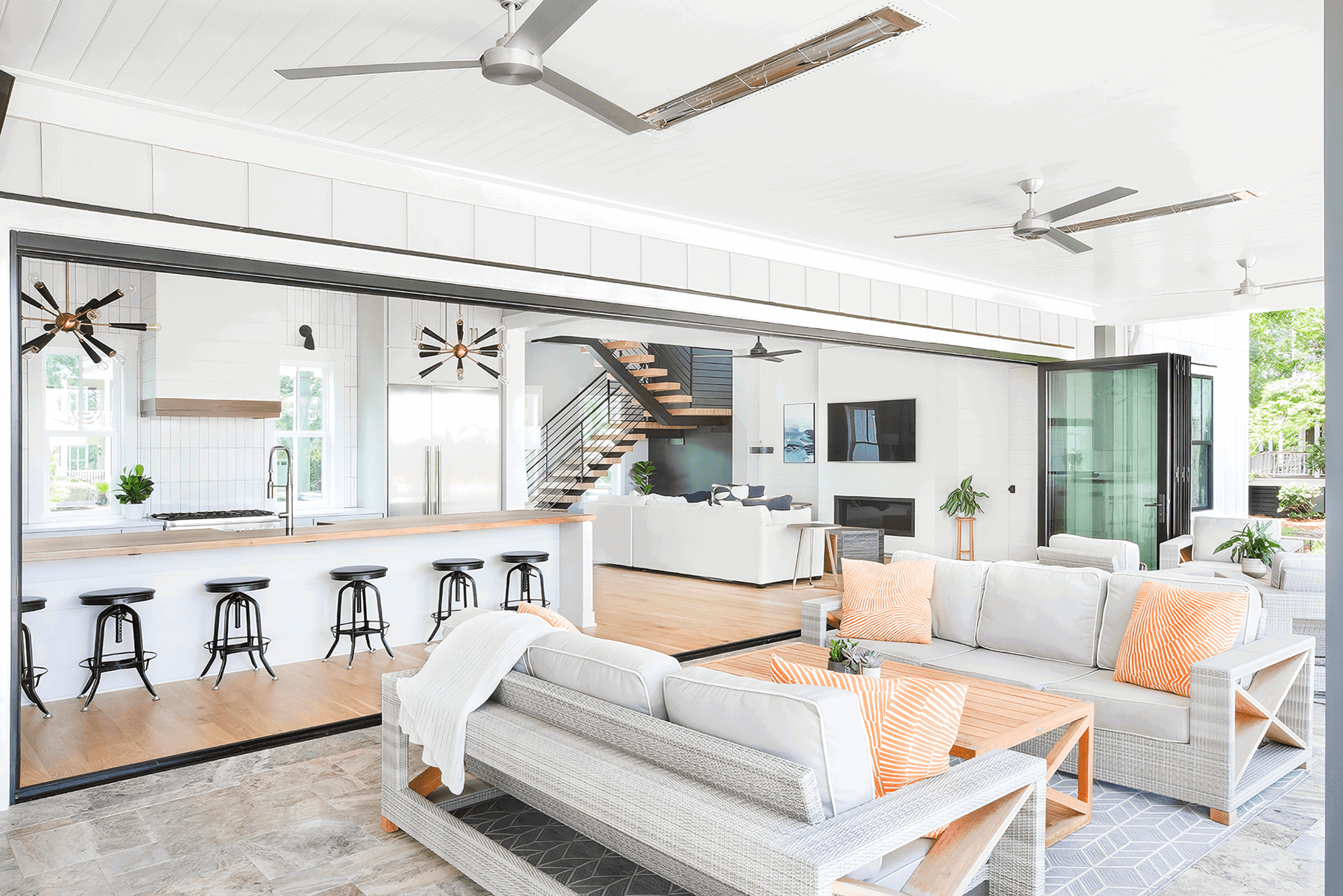
Select thermally broken doors match high performance with high style
Energy efficiency should not come at the expense of buildings that prioritize occupant wellbeing. This often means optimizing interiors for daylight access, which is well documented to support occupant health and consistent circadian rhythms. Further, thermally broken doors that offer large glass areas can contribute to beautiful and modern exteriors that create spaces people enjoy being in.
As a thermally broken door, Vista Fold can be specified with panels up to 144 inches tall and up to 54 inches wide. This opening system can also accommodate an unlimited number of panels within a narrow-profile aluminum perimeter frame. This allows designers to create glass walls that are space-efficient to operate and effectively blur the boundaries between interior and exterior. It can also be paired with Vista CT™, a thermally broken casement window system, to maintain aesthetic cohesion and energy performance across an entire exterior.
Like Euro-Wall’s full suite of solutions, these systems are available in a wide range of finish options to match nearly any design aesthetic.
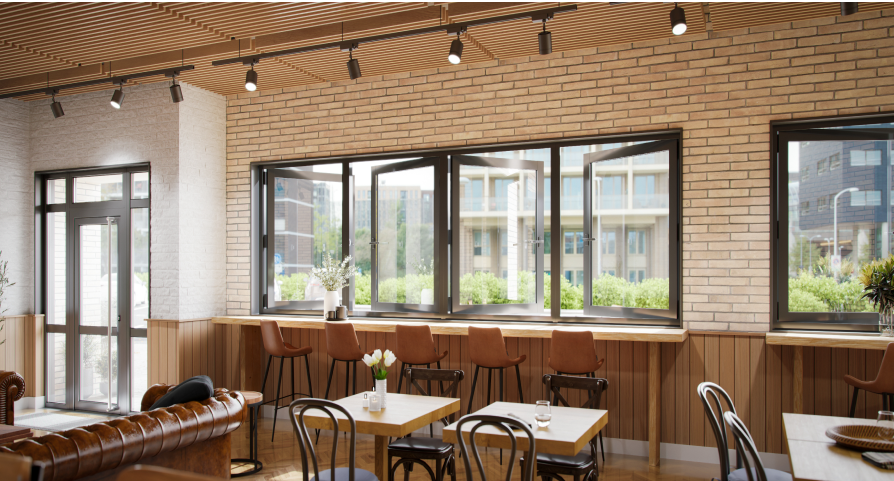
Can thermally broken doors also benefit projects in warmer climates?
While thermal breaking is often associated with colder climates, it plays an equally important role in warm and mixed climates. Just as it reduces the movement of warmth out of a building, it limits the flow of heat into a building to maintain a cooler temperature on the inside more efficiently.
In addition, thermally broken doors can also meet requirements for Florida Product Approvals and for use in High Velocity Hurricane Zones (HVHZ), like Miami-Dade County. To support use in demanding coastal environments, thermally broken door systems must meet rigorous structural, air, water and impact standards. For example, Vista Fold has passed the following testing standards to resist:
· ASTM E331-00 (Water Infiltration)
· ASTM E283-04 (Air Infiltration)
· TAS 202-94 (Wind Load)
· TAS 203-94 (Cyclic Load)
· TAS 201-94 (Large Missile Impact)
· AAMA 1304-18 (Forced Entry)
Because it defends against extreme weather, hurricanes and other damaging storm events, this Thermally broken door system delivers substantial value in warmer climates, especially in the Southeast and Gulf states where hurricanes and tropical storms frequently cause damage.
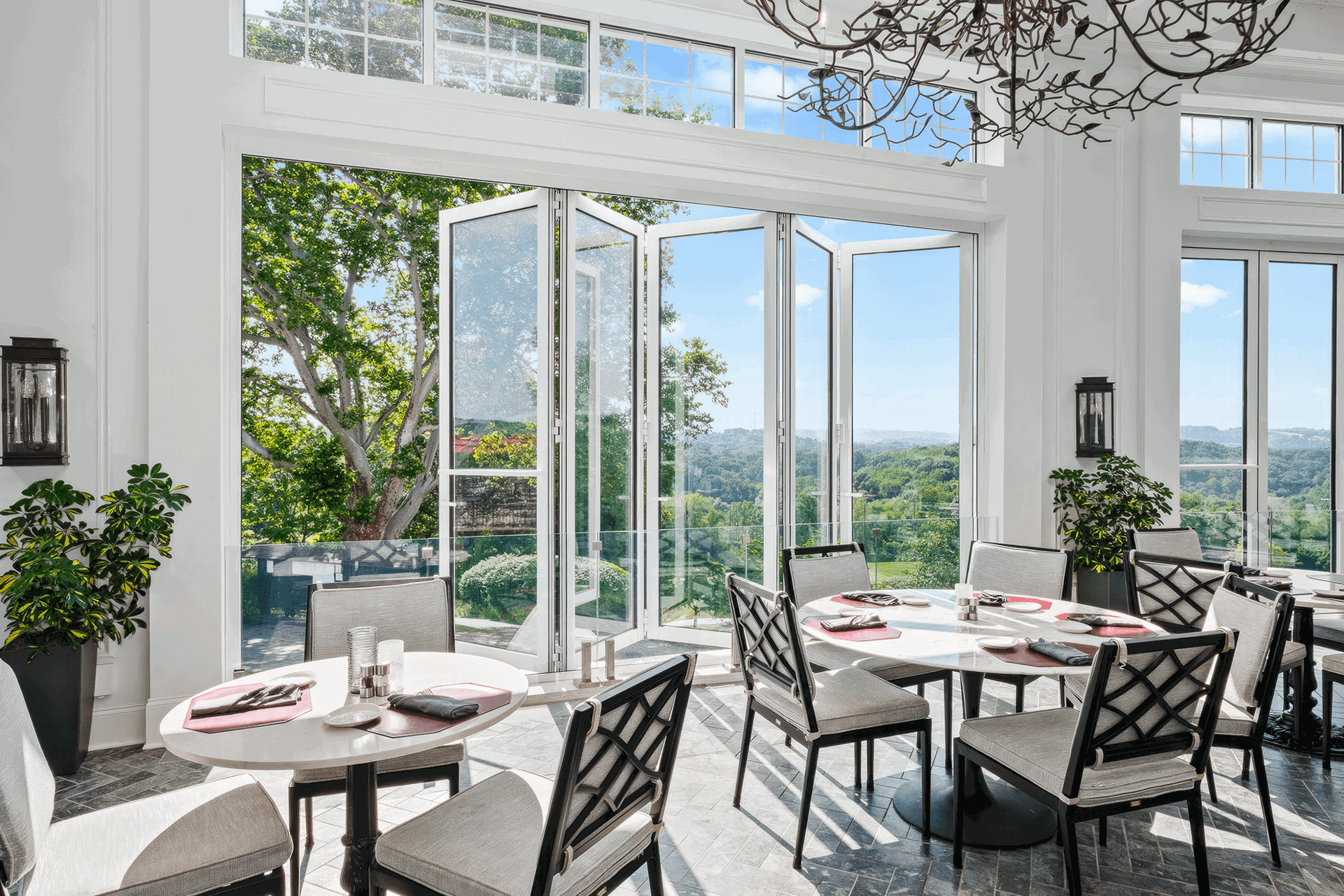
Merge resilient exteriors with clean sightlines
Over the next decade, the intersection of design and performance will define the development of door and window systems. Thermally broken doors that incorporate hurricane-resistant glass are an industry innovation and the next step in the evolution of opening solutions.
These systems support energy efficiency and weather resistance as building requirements and design expectations become more stringent. They also allow building professionals to push design boundaries with expansive sightlines and nearly unlimited opening potential.
Contact Euro-Wall today to discover what the future of door and window design could look like.